
Christ Before Me
Reflections on Ordination Weekend

There are a hundred little stories from my ordination weekend that I could tell—moments of deep joy I will carry with me for years and quiet moments of synchronicity in which God seemed, quite simply, to be delighting in reminding me that I was exactly where I was meant to be.
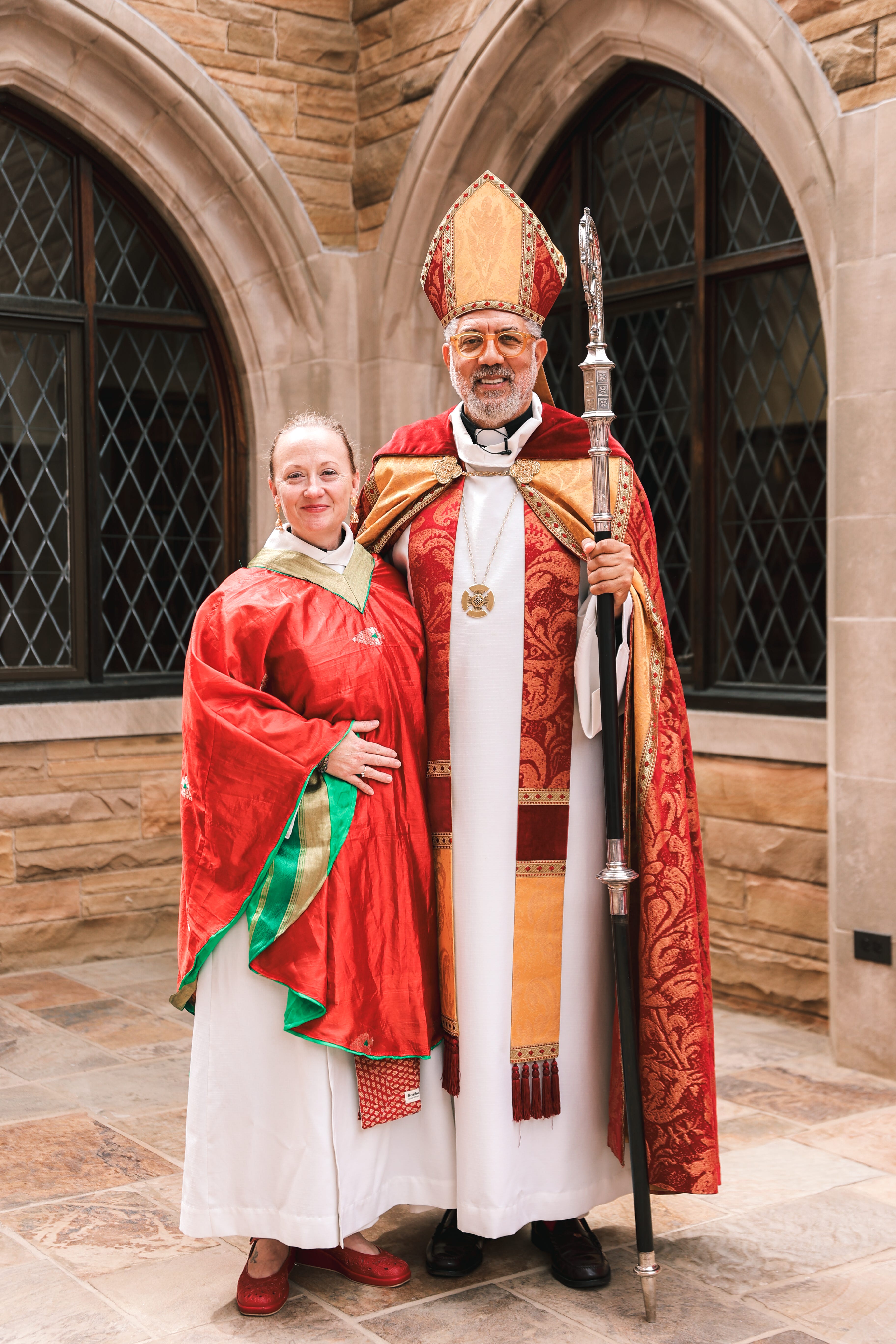
I’ll probably spend much of the summer continuing to process those Spirit-filled days.
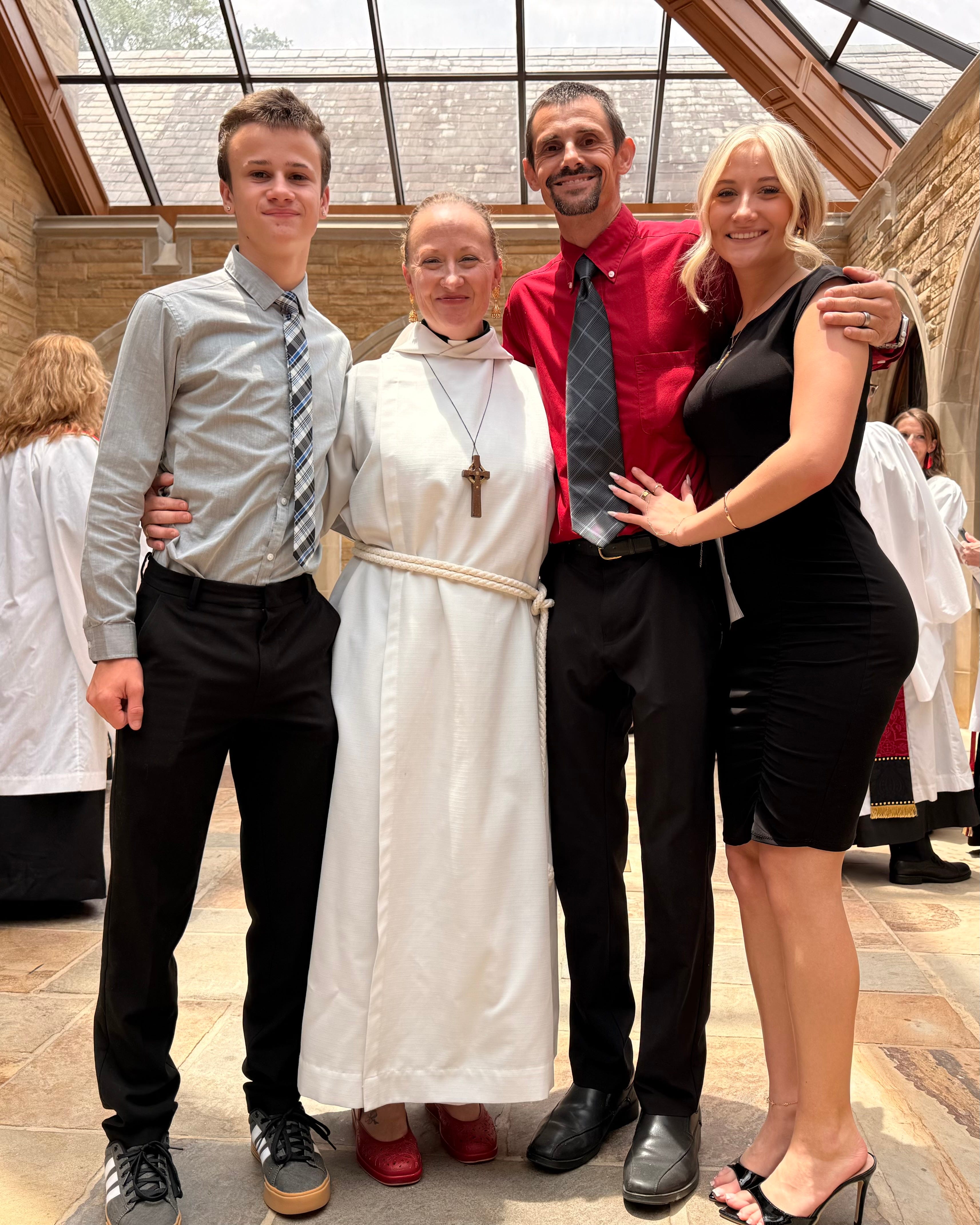
I’ve already shared a few of those treasures this week: the unexpected moments from ordination and my first celebration of the Eucharist, the embrace of community, and the chosen family who surrounded me. But when I think back over the weekend as a whole—from the dream the night before, to the Cathedral, to my first sermon as a priest—one thread seems to weave through it all.
For several years now, a prayer and the hymn based upon it have quietly followed me.
It wasn’t a hymn I ever especially loved, and St. Patrick wasn’t a saint I naturally gravitated toward. Yet again and again the words found me. During my doctoral research into contemplative communities. During retreats. In conversations. In moments when I was wrestling with fear and discernment. Eventually, I stopped dismissing the pattern and began paying attention. (I made this fun little video with my favorite versions of this song, along with photos from my five-year discernment process).
As I prepared my first sermon as a priest, I knew I wanted to preach on St. Patrick’s Breastplate. I asked our choir director if we could sing I Bind Unto Myself Today, and I built my sermon around the simple but profound truth at the heart of that ancient prayer: Christ before me. Christ behind me. Christ beside me. Christ within me.
Then, moments before the procession into the Cathedral, while standing with my family, mentors, and those who would accompany me as I took vows I hope to spend the rest of my life growing into, I heard the opening notes of the processional hymn.
It was I Bind Unto Myself Today.
I wish someone had captured my face as surprise gave way to laughter and tears. It felt like one of those deeply personal gifts God occasionally gives, not because we need proof, but because love delights in reassurance.
As I processed into the priesthood to the very hymn I would preach from the next morning, I could only smile at the gentle reminder: “You are exactly where you are meant to be. Do not be afraid.”
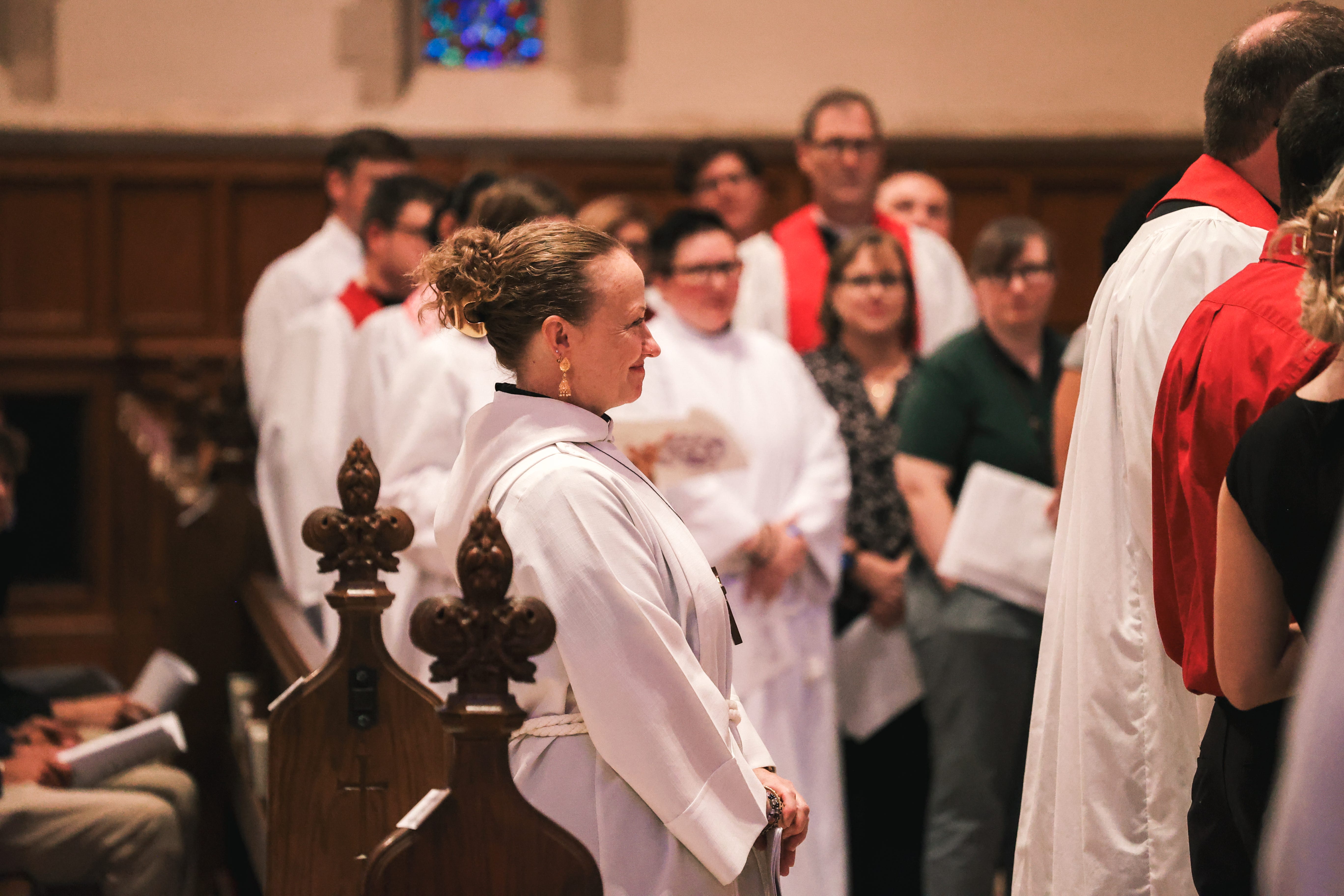
A few days later, while recounting the weekend to my spiritual director, tears welling up in both our eyes, she observed that every story seemed to circle around the same theme. Again and again Christ had gone before me, inviting me toward what naturally frightens me, not by removing fear, but by meeting me within it.
Looking back now, I realize that it became the true gift of ordination weekend. And it became the heart of my first sermon as a priest.
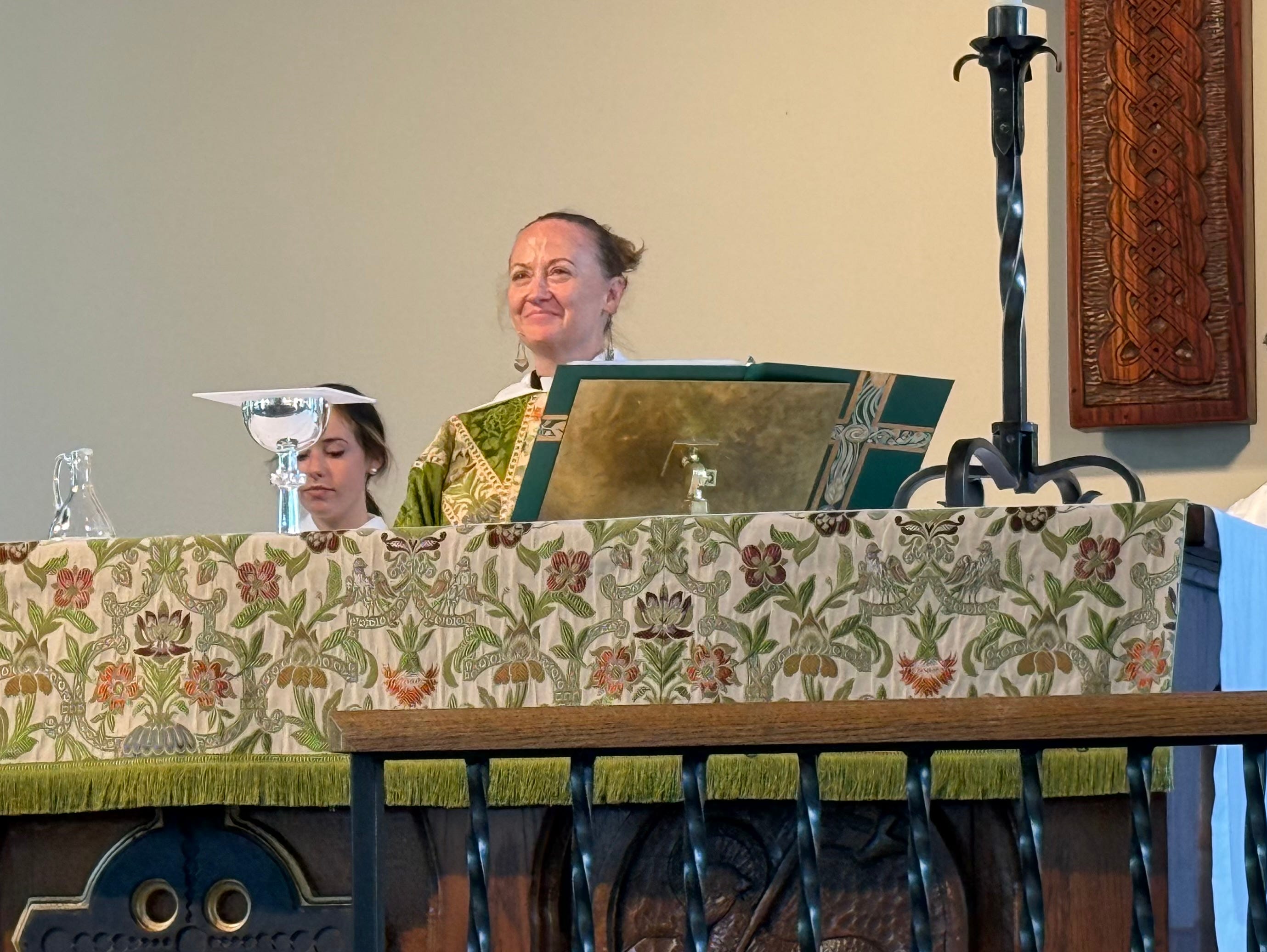
The following sermon was preached on June 21, 2026, at St. Paul’s Episcopal Church in Newnan, Georgia, on the occasion of my first Sunday serving as a priest.
Watch
(View the full service here)
Listen
Read
Grace and peace to you in the name of the Father, and of the Son, and of the Holy Spirit, the Three-in-One and One-in-Three. Amen.
There is something strange and holy about returning to a place you know well and discovering that you are both exactly the same and completely different from when you left it. Today, I come home to the church where I was confirmed, where I first began asking whether God might be calling me to something new, and where I preached my first sermon. I have stood at this very altar countless times as a lay minister, a seminarian, and a deacon. And today, for the first time, I will preside as priest at that same altar.
I can hardly believe this day is here after such a long road of preparation and study. I am so full of joy to get to share this day with you — the very people who have prayed with me, discerned alongside me, supported, and equipped me. Today we will celebrate this milestone together, but today is not an arrival, by any means. It is just another step in my journey and, I pray, in yours as we continue to walk together when I return to you in the Fall to serve as your Associate Rector.
When I started preparing my reflections for today, the gospel passage caught me off guard. This section of Matthew is driven by fear and familial strife, a little difficult to preach on when it falls on Father’s Day as it does this year. Several commentaries speak of this as one of the hard sayings of Jesus.
I mean, I wasn’t aware there were any easy ones, but certainly, this is not a cozy, comforting passage – this one in which Jesus tells his disciples he has come to bring a sword, to set a man against his father, and that those who follow him must take up their cross and follow him.
But the more I sat with these words, the more I realized they were perfect for today, for the beginning of this new thing God is doing in my life and in the life of St. Paul’s. This passage is a sending, the tail-end of a commencement message of sorts. Jesus has gathered his closest followers, and he is preparing them for their first mission apart from him.
He is about to send them out into the world carrying a message that will heal people, comfort people, and offend people. And Jesus, as he so often does, refuses to romanticize any of it. This is not a great pep talk. He doesn’t promise them success. In fact, he promises them that it won’t be the case. He tells them they will be misunderstood and opposed. They will face rejection and persecution. Following him will come at a cost. And then, three times, he says the same thing: Do not be afraid.
I love the way Matthew tells us something about what’s going on inside the disciples’ hearts by how Jesus speaks to them, because Jesus would not need to say it if they were not afraid. The disciples are not fearless heroes. They are ordinary people standing on the edge of something they cannot fully see—Fishermen. Tax collectors. People with doubts and questions and limitations. People who are about to discover that discipleship is not a single decision but a lifetime of saying yes to Christ.
They are people just like us—certainly just like me. Lest you think that because I now wear this stole I have it all figured out, let me assure you: I do not. In fact, “do it scared” has become something of a mantra for me over these past few years as I have navigated all the new steps God has placed before me. I am slowly learning that courage is choosing not to run from what frightens us, but to trust Christ enough to keep moving forward through it. Believe me when I say I am doing this scared today.
And perhaps that is why, as I prayed with this Gospel, I found myself thinking about Saint Patrick. He’s become a bit of a companion for me on my journey these past few years. He’s one of the most widely known Saints, sadly known mostly for his association with shamrocks and green beer. But the real story of Patrick, who helped birth a localized expression of faith we know as Celtic Christianity, is far more than this.
The real Patrick was a sixteen-year-old boy kidnapped from his home and sold into slavery in Ireland. He was a young shepherd who spent six years alone on the hillsides tending sheep and learning how to pray. He eventually escaped and made his way home. And then, years later, after studying for the priesthood and beginning a new life, he heard God calling him back—back to Ireland, back to the place of his captivity and to the very people who had enslaved him.
That is the part of Patrick’s story that has always captivated me—that he returned. He followed Christ somewhere difficult and at a great cost to himself. And the longer I am on this journey of faith, the more I realize that every disciple eventually encounters some version of that moment when we’re asked to do what is costly.
Perhaps it is not to go to a foreign country, but likely we’ll be called to a place we would rather not go, into a conversation we would rather not have, or to grant a forgiveness we would rather not offer. We’ll face a loss we did not choose or a calling that asks more of us than we expected.
For me, following Christ has often meant leaving what was familiar. Rarely has it been easy. But I have discovered that the deeper question is never whether Christ is calling. The deeper question is whether I trust that Christ will be there when I arrive.
And I think that is precisely what Patrick discovered on those lonely hillsides of Ireland. Before he was a missionary, before he was a priest, before he was a saint, he was simply a young man learning to pray. Day after day, tending sheep in the wilderness, separated from everything familiar, he developed a deep awareness of God’s presence. What began as captivity became, somehow, the place where he encountered Christ. There is a beautiful irony in that. The place that might have destroyed him became the place that formed him.
As inspiring as St. Patrick’s story is, for a long time, I assumed it was the kind of life that was unattainable for ordinary people like me. I believed people like Patrick possessed something I did not. I think many of us secretly believe that about the saints. We read their stories and imagine they must have had access to some kind of spiritual certainty that the rest of us lack. We assume they were braver than we are, more faithful than we are, somehow closer to God than ordinary people.
If I’m honest, I carried that assumption with me most of my life about the clergy, and it was a big reason I didn’t even think that life was for me. Though I felt called to ministry early in life, I doubted myself every step of the way.
Some of you know that the Monastery of the Holy Spirit in Conyers has been an important place in my own spiritual journey. In fact, I just spent two days there last week. When I first began making retreats there a decade ago, I was convinced the monks knew some secret I didn’t know. Surely these men who had dedicated their lives to prayer had figured something out that the rest of us were still searching for.
Then one day, I was sitting with Brother Mark Dohle, a Trappist monk who has become a friend over the years. During one of our first conversations, he began speaking quite openly about his struggles. He said something to me I’ll never forget. He said that the monks were not there in the monastery because they had stronger faith than the rest of us. They were there because they knew how much they needed the structure and accountability of communal life to keep themselves connected to God. The monastery was not proof that they had arrived. It was an acknowledgment that they hadn’t.
I realized Patrick did not return to Ireland because he had become fearless. The disciples did not leave everything and follow Jesus because all their questions had been answered. And, less than twenty-four hours into priesthood, I can assure you that ordination has not suddenly removed all my doubts, answered all my questions, or made me less dependent upon God’s grace.
The vows I took yesterday only deepened my awareness of how much I need Christ before me, Christ behind me, Christ beside me, and Christ within me, because discipleship is not about becoming extraordinary. It is about becoming rooted. Rooted deeply enough in the love and presence of Christ that we can follow wherever he leads, even when the path ahead is unclear and difficult.
In my doctoral studies on contemplative communities, God kept bringing me across communities that are rooted in the Celtic tradition St. Patrick helped birth, and one prayer seemed to follow me wherever I went. Again and again, I encountered what we now call Saint Patrick’s Breastplate. Perhaps some of you know it through Hymn 370, “I Bind Unto Myself Today,” which we will sing later during the offering. Different versions of this song have been my constant companions over the last five years of my discernment process.
Historically, it is what is known as a lorica in Celtic Christianity, a breastplate prayer. The word comes from the Latin word for armor. Loricas are prayers of remembrance, ways of rooting oneself in God’s presence before stepping into something difficult, usually prayed in the morning before facing the day ahead.
Tradition tells us Patrick prayed these words as he prepared to face opposition and danger, and what strikes me is that the prayer does not ask God to remove the difficulty. It asks God to be present within it.
And perhaps that is what Patrick was trying to teach us through his Breastplate prayer and what Jesus was trying to teach in his commissioning of the disciples: not how to become fearless, but how to remember whose we are.
The prayer itself is breathtaking in its scope. It’s too long to read with you here today, and the hymn is 7 verses long, so we won’t be singing the whole thing, but I encourage you to meditate on it during the offering and perhaps spend some time more with the full prayer this week. Patrick begins by rooting himself in the mystery of the Trinity, binding himself to the God who is Three-in-One and One-in-Three. Then, in almost Creed-like fashion, he moves through the life of Christ, grounding himself in the whole story of salvation.
From there, the prayer expands outward. He calls upon the witness of the saints and apostles who have gone before him. He invokes the strength of heaven itself: the light of the sun, the splendor of fire, the swiftness of the wind, the depth of the sea, the firmness of the earth. He entrusts himself to God’s wisdom, God’s guidance, God’s protection, and God’s presence. It is as though Patrick is looking in every direction he can possibly imagine and discovering that God is already there. In Christ. In creation. In the communion of saints. In the Church. In the ordinary and extraordinary moments of life.
The prayer begins where we begin, where the disciples begin: with fear and uncertainty about what lies ahead. But by the time it reaches its climax, Patrick is no longer focused on what threatens him. His attention has shifted entirely to the presence of Christ surrounding him. And it is there that we find perhaps the most beloved lines of all: “Christ with me, Christ before me, Christ behind me, Christ in me, Christ beneath me, Christ above me...”
Though the prayer begins with Christ surrounding the individual person, it does not end there. It expands, widens, and begins to see Christ everywhere. In one of the most beautiful passages of the Breastplate, Patrick prays: “Christ in the heart of every man who thinks of me, Christ in the mouth of every man who speaks of me, Christ in every eye that sees me, Christ in every ear that hears me.”
What a remarkable way of seeing the world, not simply asking Christ to be with me, but learning to recognize Christ in those around me. Can we look into another person’s eyes and believe that Christ may already be there? Can we listen to another person’s story and discover that Christ has been present in places I never expected? Can we encounter friend and stranger alike and trust that God is already at work?
I think this, too, is part of what Jesus is teaching the disciples in Matthew’s Gospel. Our reading today concludes with Jesus’ promise that whoever loses their life for his sake will find it. But if we allow ourselves one more verse, Jesus immediately turns to the language of welcome: “Whoever welcomes you welcomes me, and whoever welcomes me welcomes the one who sent me.”
In other words, Christ becomes present in the encounter itself. The disciple carries Christ into the world, and those who receive the disciple receive Christ. Suddenly, the focus shifts from what the disciples are giving up to what Christ is doing through them. The boundaries begin to blur. Where is Christ? In the one who is sent and in the one who welcomes. In the one who offers a cup of cold water and in the one who receives it.
And suddenly discipleship becomes about much more than individual belief. It becomes a way of seeing, a way of recognizing Christ’s presence in places we might otherwise overlook. And when I look back on my own journey, I realize that some of the clearest encounters with Christ have come through people.
Through teachers and classmates, several of whom are here with me today. Christ came to me through what the Celts call Anam Cara, a soulmate or soul friend. If Patrick is right, and if Jesus is right, then Christ has been present in all of those encounters. Christ in the heart of those who prayed for me right here in this church. Christ in the eyes of those who saw gifts in me that I could not yet see in myself. Christ meeting me through his people. And that is true for all of us.
When we look back over our own journeys of faith, we may discover that Christ has been accompanying us in ways we did not recognize at the time. Because discipleship is never a solitary journey. We follow Christ together, and we help one another find the courage to keep saying yes. Yes, when the path is clear. And yes, when it is not. Yes, when the cost is small. And yes, when it is great. Yes, when we feel confident. And yes, when we are afraid.
Which brings us back to where Jesus began. “Do not be afraid.” Jesus knows fear has a way of distorting our vision. It narrows our world. It convinces us that preserving ourselves is the highest good. It tempts us to organize our lives around safety, approval, comfort, and control. For many years, it kept me from answering the call God had placed on my life. Fear has been a very real presence in my life. That’s why I cling to prayers like St. Patrick’s Lorica.
Because they remind me that Jesus invites us, as he did the disciples, to focus on him instead of the fear. He tells them not to fear those who can harm the body but cannot touch the soul. Then he points their attention to the sparrows. Not one of them falls to the ground apart from God’s care. Even the hairs of their heads are numbered.
The disciples are being asked to remember who God is—the One sending them is also the One who knows them completely. The One calling them is also the One who loves them completely. The One asking them to risk is also the One who will never abandon them.
And I think that is why Jesus can say something that sounds almost impossible: “Those who find their life will lose it, and those who lose their life for my sake will find it.”
One of the deepest truths of the Gospel is that life is not found by clinging tightly to it. Life is found by giving it away. By loving when it would be easier to withdraw. By forgiving when it would be easier to hold a grudge. By telling the truth when silence would be safer.
Most of us will never be asked to die for our faith, but we will be asked to live it, and that may be harder. We will be asked to carry Christ into our workplaces and schools, into our friendships and marriages and families. We will be asked to love difficult people. To choose hope when cynicism feels easier. To trust God when we cannot see the outcome.
What if the invitation of discipleship is to become so rooted in God’s love that the opinions of the crowd no longer determine the direction of our lives? What if courage is not the absence of fear but the willingness to trust God’s goodness more than our fears? That is what the disciples were learning. That is what Patrick learned, and it is what we are still learning. Not that the road ahead is certain. But that Christ is with us. Christ before us. Christ behind us. Christ beside us. Christ within us.
Christ in friend and stranger. Christ in the beauty of creation. Christ in the communion of saints. Christ in this gathered community. And in a few moments, Christ in this bread and this wine. Yes, today, for the first time, I will stand at this altar and speak words that countless priests have spoken before me. But the miracle is not that a priest says them. The miracle is that Christ continues to meet us through them.
The same Christ who called the disciples is the same Christ who accompanied Patrick. He is the same Christ who has guided each of us through every leaving and every returning. And he is the same Christ who gathers us now at this table.
And so, with Patrick and with the saints who have gone before us, may we arise today through the strength of the Trinity, trusting that wherever Christ sends us, Christ has already gone before us.
Amen.